Simone Dalla Bella translates the neuroscience of rhythm – how the brain, body, and movement stay in time – into insight for health, performance, and human connection.
What happens when the brain, body and our world are in sync?
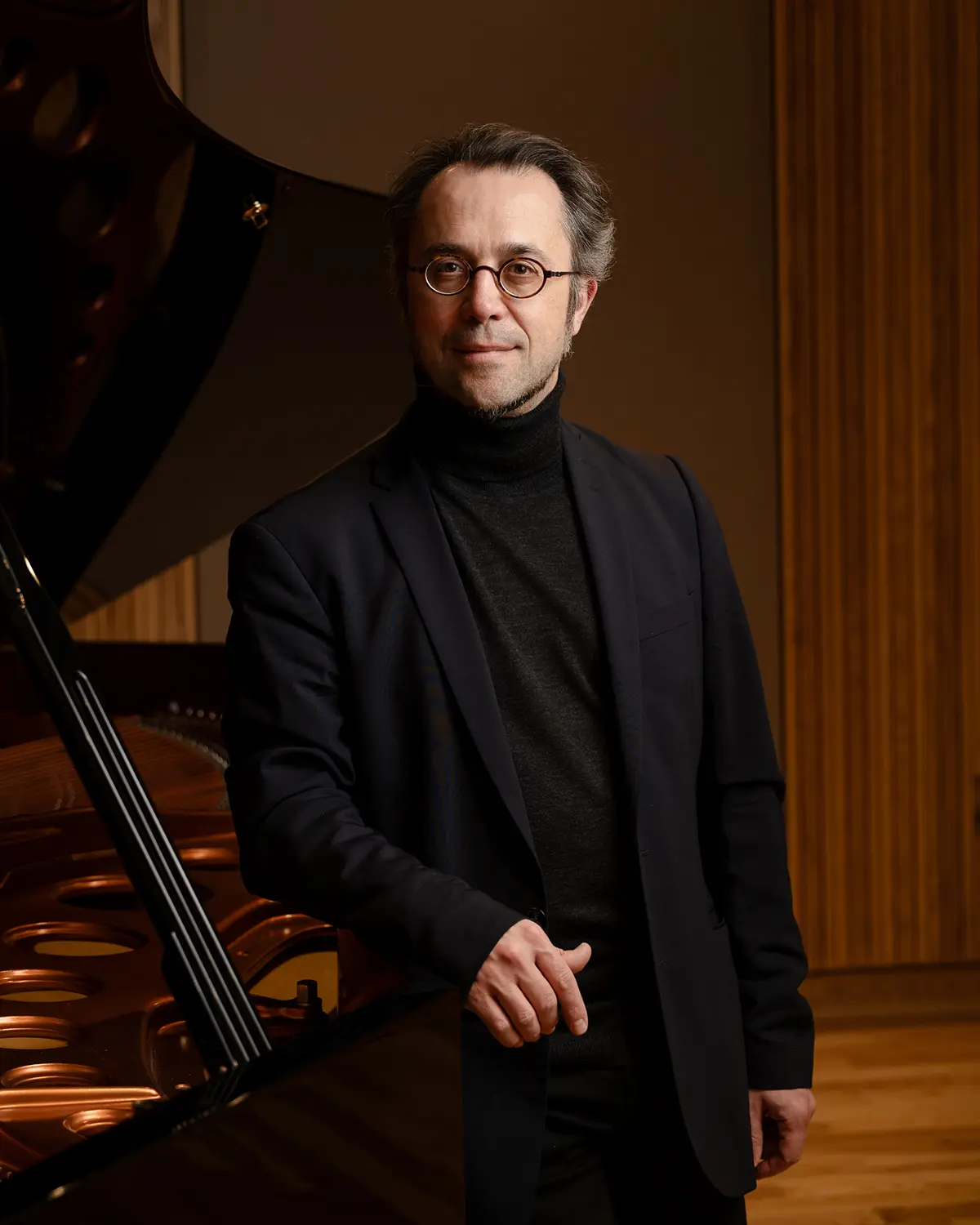
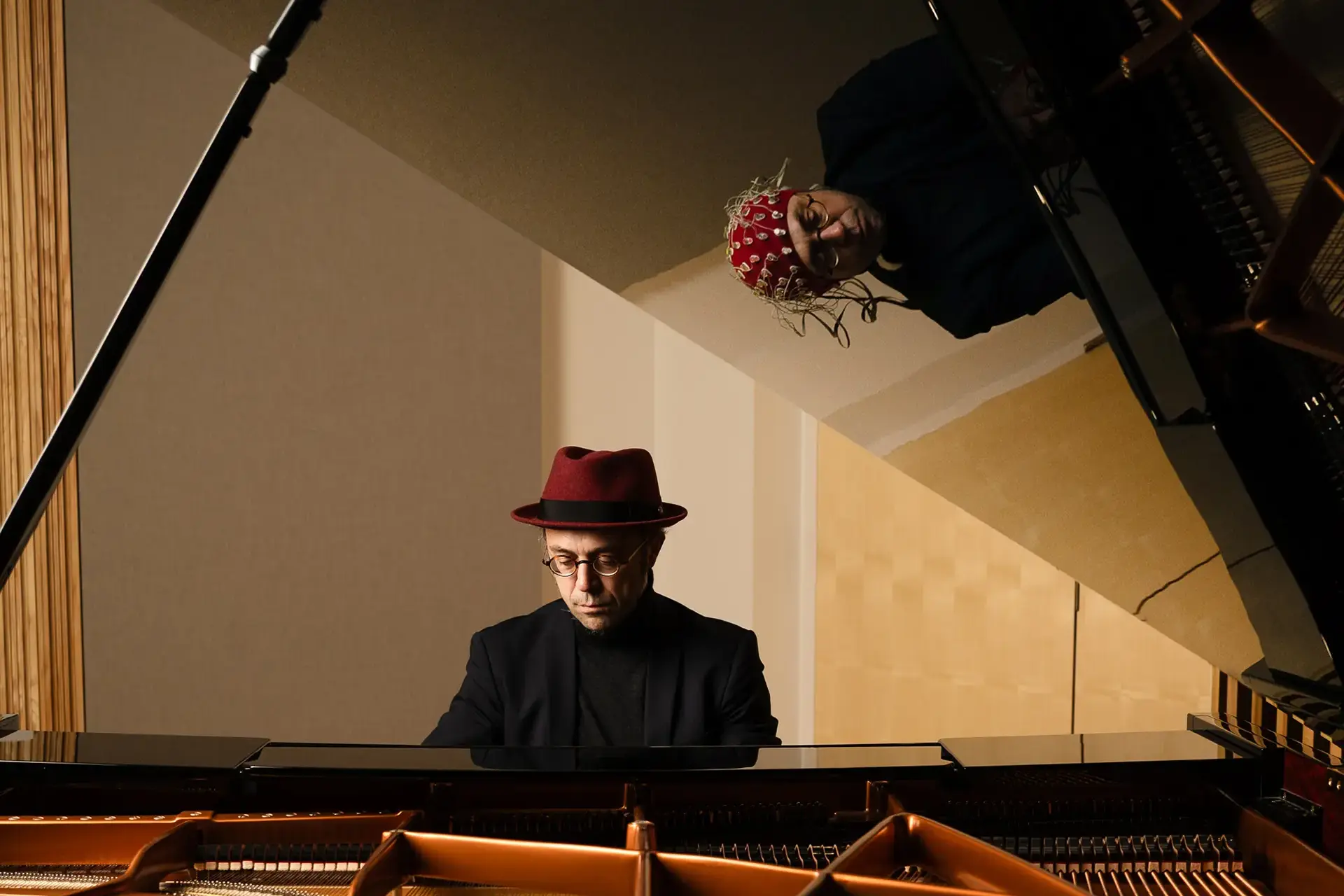
Simone Dalla Bella is a cognitive neuroscientist, pianist, and Professor of Psychology at the University of Montreal.
As the co-director of the International Laboratory for Brain, Music and Sound Research (BRAMS), his work explores a fundamental question of the human condition: What happens when the brain, body, and our world are in sync? Can those living out of sync realign, recover, and truly thrive?
Rhythm begins in the body, from the heartbeat to the way we walk, speak, and move with others. Blending science and music, Simone reveals how the brain turns rhythm into prediction and action, shaping movement, attention, and cognition. He also explores what happens when our sense of timing breaks down, and how rhythm can help restore movement, support cognitive function, and bring the body and brain back into sync.
His work translates these discoveries into music-based training and new technologies designed to support recovery and help people reconnect with everyday life.
How rhythm helps us reconnect, recover and thrive.
A cognitive neuroscientist and pianist translating rhythm science into insights for health, performance, learning and human connection.
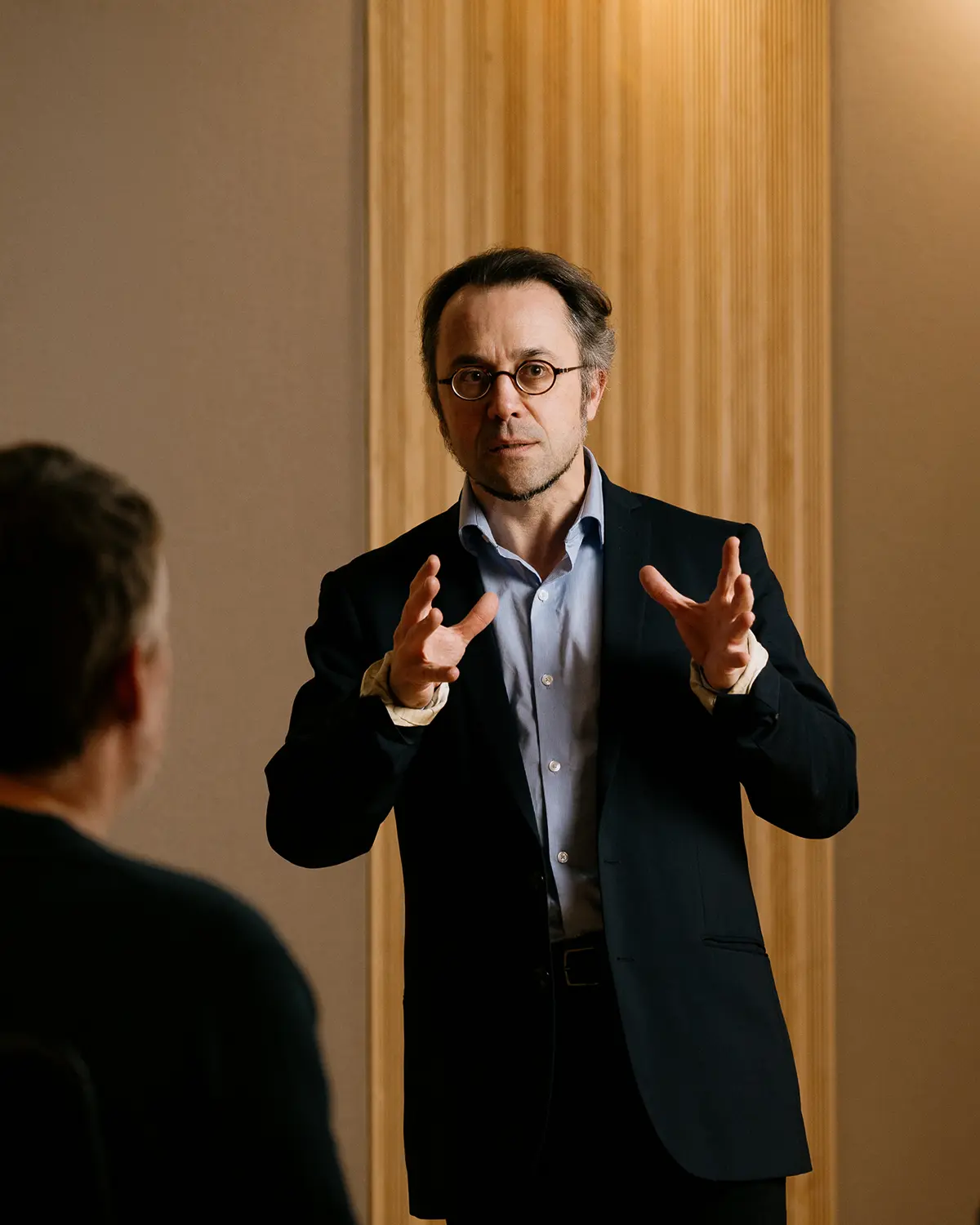
As a speaker, Simone turns the science of rhythm and the brain into practical insight, showing how timing shapes the way we move, pay attention, communicate, and connect with others, while exploring what happens when our sense of timing breaks down.
He shows how music, rhythmic training, and new technologies can help restore function and reconnect people with everyday life. His message is simple: when we get in sync, we function better and can thrive.
Through live demonstrations and the piano, he lets audiences hear, see, and feel rhythm in action, turning the science into a vivid experience and showing what being in—and out of—sync actually means.
"This impressive demonstration of music’s power was just one of the examples that kept the audience rapt during Dr. Dalla Bella’s presentation."
Claire Honda
The Convergence Initiative, "Your Brain on Music" – Event Recap
Keynote & Lecture
30, 45 or 60 minutes, with optional Q&A and optional piano and audience rhythm demonstrations. Extended lecture-performance with a brief closing piano performance.
Workshop
The Live Rhythm Lab, a participatory 60–90 minute format combining accessible neuroscience, live piano, rhythm demonstrations and audience activities. A half-day version is also available for professional, educational, or community groups.
100+
Invited talks worldwide
60+
Delivered internationally
3
Continents
North America, Europe & Australia
4
Languages
English, French, Italian & Polish
Research
Rhythm shapes us
Simone’s research asks how rhythm shapes the way we move, learn, and connect with others. He studies why timing abilities differ across people, how they change across development and neurological conditions, and how music and technology can help strengthen or restore them.
I
Rhythm Shapes Us
From the heartbeat to walking, speaking, and moving with others, rhythm organizes how we experience and interact with the world. Simone’s research examines how the brain turns rhythm into prediction and action, and why this seemingly natural ability can differ so dramatically across people, development, and neurological conditions.
Featured Research
When the Beat Doesn’t Reach the Body
A beat begins and, almost without thinking, we tap a foot or start to move. But not everyone can. Research on beat deafness discovered people who can hear rhythm perfectly well but cannot move in time with it, revealing the remarkable bridge the brain must build between music and the body.
Sowiński & Dalla Bella (2013), Poor synchronization to the beat may result from deficient auditory-motor mapping.
When timing is disrupted, movement, attention, communication, and daily life can be affected, as in conditions such as Parkinson’s disease, ADHD, and dyslexia. The research investigates where synchrony breaks down: perceiving the beat, producing regular movement, or connecting perception and action.
Featured Research
When the Body Loses Its Rhythm
We usually take the timing of our own body for granted, until it begins to fail. In Parkinson’s disease, timing can become less reliable across walking, hand movements, and even movements involved in speech. The body starts to fall out of sync with itself, revealing just how much everyday movement depends on rhythm.
Puyjarinet et al. (2019), Heightened orofacial, manual, and gait variability in Parkinson’s disease results from a general rhythmic impairment.
Music, repeated practice, serious games, and digital tools can provide external structure and help restore timing and function. From tablets and movement sensors to immersive environments and group synchronization, the work explores how rhythm can support rehabilitation, everyday participation, and shared experiences that bring people together.
Featured Research
Can a Beat Help a Child Focus?
For children with ADHD, staying focused and in control can be a daily challenge. In a study carried out at home, children played a musical game that asked them to listen, anticipate the beat, and move with it. Those who received the rhythm training improved their rhythm skills, with evidence of improvement in abilities related to attention and self-control. It suggests an intriguing possibility: that playing with rhythm may train more than rhythm itself.
Jamey et al. (2025), Can you beat the music? Validation of a gamified rhythmic training in children with ADHD.
We use cookies to enhance your browsing experience, serve personalized ads or content, and analyze our traffic. By clicking "Accept All", you consent to our use of cookies.
Functional / Necessary
Always active
Required for the website to work properly and cannot be switched off.
Preferences
The technical storage or access is necessary for the legitimate purpose of storing preferences that are not requested by the subscriber or user.
Analytics
Helps us understand how visitors use the website through services such as Google Analytics.The technical storage or access that is used exclusively for anonymous statistical purposes. Without a subpoena, voluntary compliance on the part of your Internet Service Provider, or additional records from a third party, information stored or retrieved for this purpose alone cannot usually be used to identify you.
Marketing / Third-party content
Used for services such as YouTube and Google reCAPTCHA, which may set cookies or process information through third-party services.